Stainless Steel 304 vs 316 Enclosures
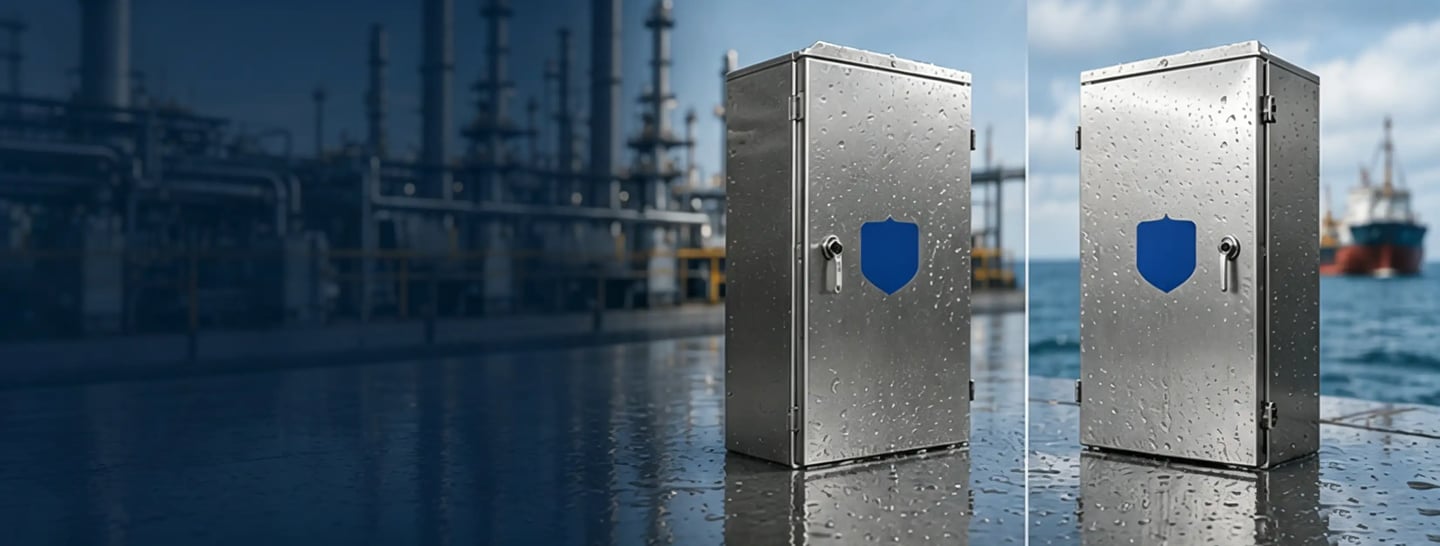
Stainless steel 304 and 316 are the most common materials used for electrical enclosures in industrial applications.
Both provide excellent corrosion resistance and mechanical strength, but 316 offers improved resistance in highly corrosive environments.
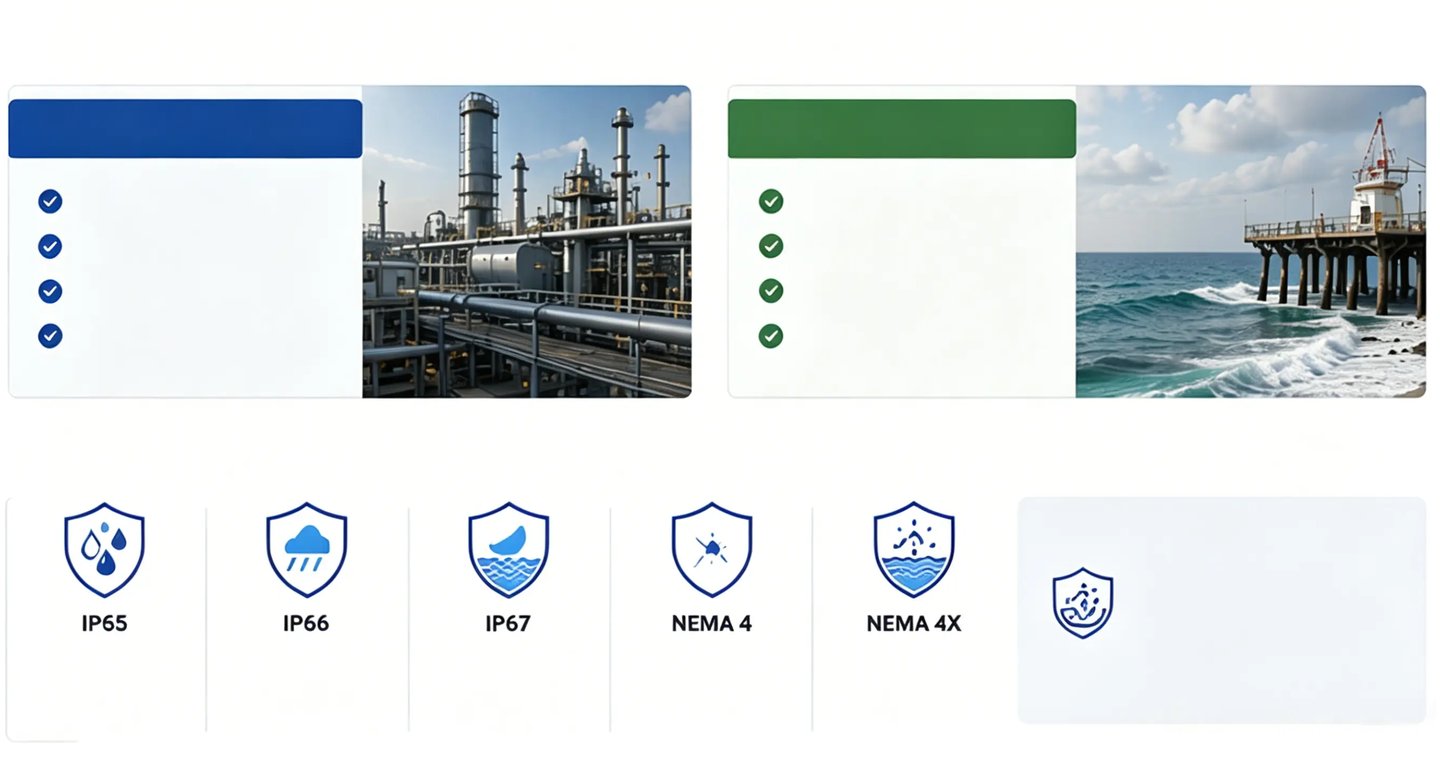
304
316
Stainless Steel 304 Enclosures
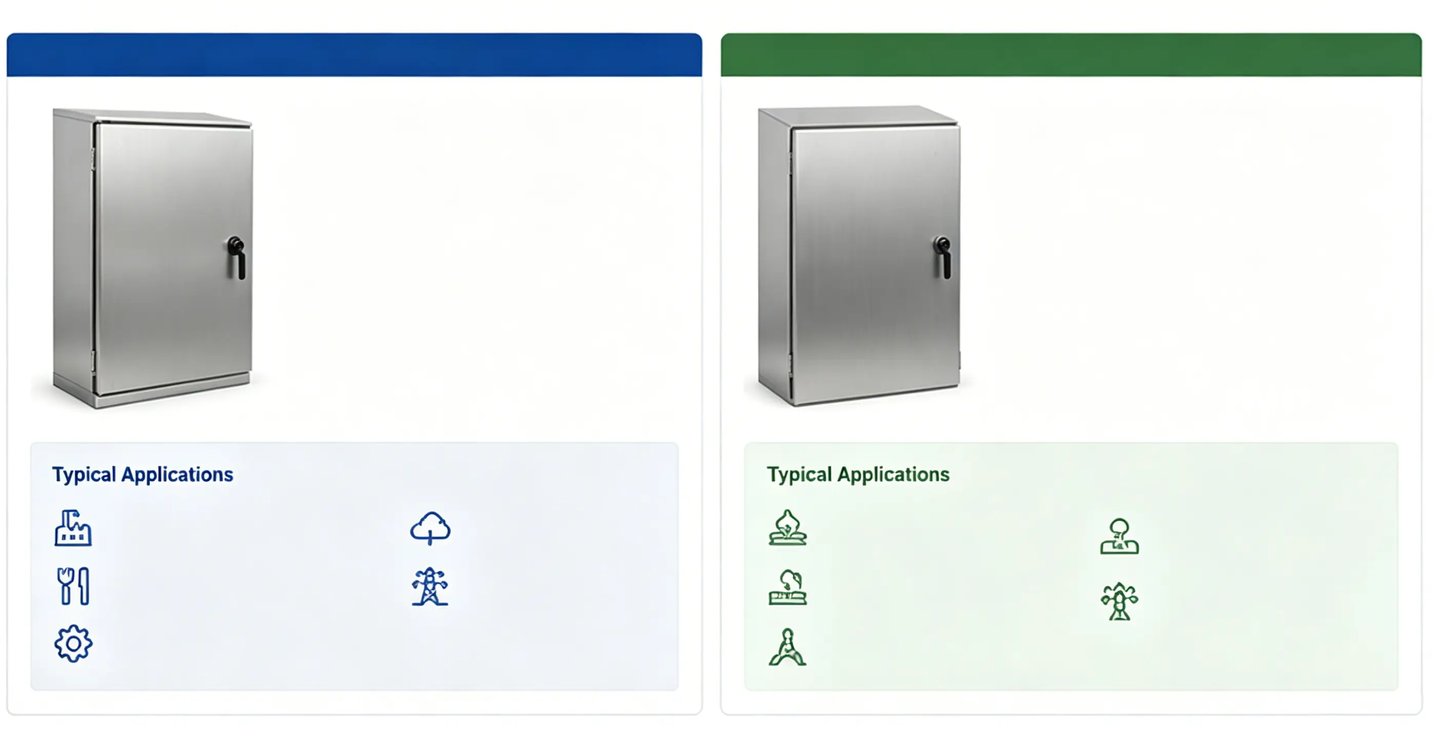
304 stainless steel is widely used in general industrial and outdoor applications.
Key Characteristics & Typical Applications
Stainless Steel 316 Enclosures
Key Characteristics
Good corrosion resistance
Suitable for humid environments
Durable and easy to maintain
Cost-effective compared to 316
316 stainless steel contains molybdenum, providing enhanced resistance to chlorides and corrosive chemicals.
Key Characteristics
Superior corrosion resistance
Better performance in salt-rich environments
Suitable for aggressive industrial conditions
Extended service life in harsh environments
Industrial facilities
Food processing equipment
Automation systems
Outdoor installations
Utility infrastructure
Marine installations
Coastal infrastructure
Chemical processing plants
Wastewater treatment facilities
Offshore equipment
Feature Stainless Steel 304 Stainless Steel 316
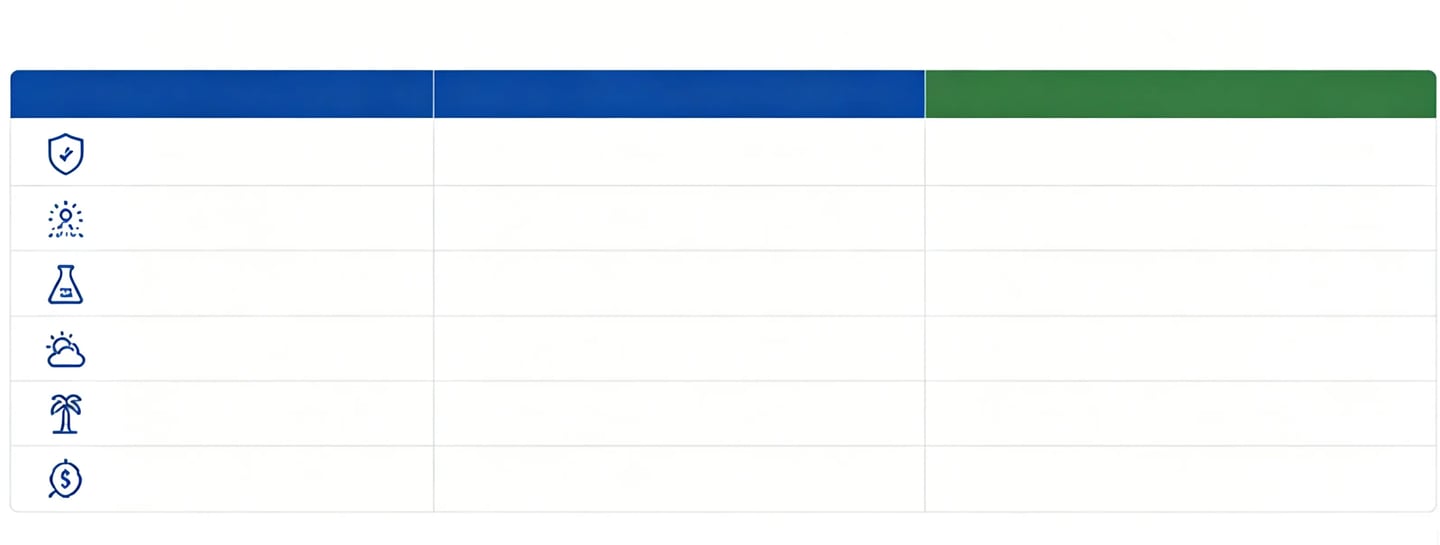
Corrosion Resistance Excellent ★★★★☆ Superior ★★★★★
304 vs 316 Comparison
Salt Spray Resistance Good ★★★☆☆ Excellent ★★★★★
Chemical Resistance Good ★★★☆☆ Excellent ★★★★★
Outdoor Performance Excellent ★★★★☆ Excellent ★★★★☆
Coastal Environments Suitable ★★★☆☆ Recommended ★★★★★
Cost Lower $$ Higher $$$
Choose Stainless Steel 304 If:
Which Material Should You Choose?
General industrial use
Indoor installations
Standard outdoor environments
Cost is a consideration
Choose Stainless Steel 316 If:
Coastal locations
Marine environments
Chemical exposure
High humidity and salt spray conditions
Protection performance depends on enclosure design, sealing system, and installation conditions.
Dust Tight Water Jet Protection
Dust Tight Powerful Water Jet Protection
Dust Tight Tomporary Watar Immersion Protection
Indoor/Outdoor Water Splash Protection
Corrosion Resistant Suitable for Harsh &Marine Environments
Is 316 stainless steel always better than 304?
Not necessarily. For most industrial and outdoor applications, 304 provides sufficient corrosion resistance. 316 is typically selected when additional protection against salt spray or chemicals is required.
Can 304 stainless steel be used outdoors?
Yes. 304 stainless steel is commonly used for outdoor electrical enclosures in non-corrosive environments.
Why is 316 more expensive?
316 contains molybdenum, which improves corrosion resistance and increases material cost.
Which material is recommended for coastal environments?
316 stainless steel is generally recommended for coastal and marine applications due to its improved resistance to salt-induced corrosion.
Can both materials be customized?
Yes. Both 304 and 316 enclosures can be manufactured with custom dimensions, cutouts, mounting plates, accessories, and surface finishes.
FAQ
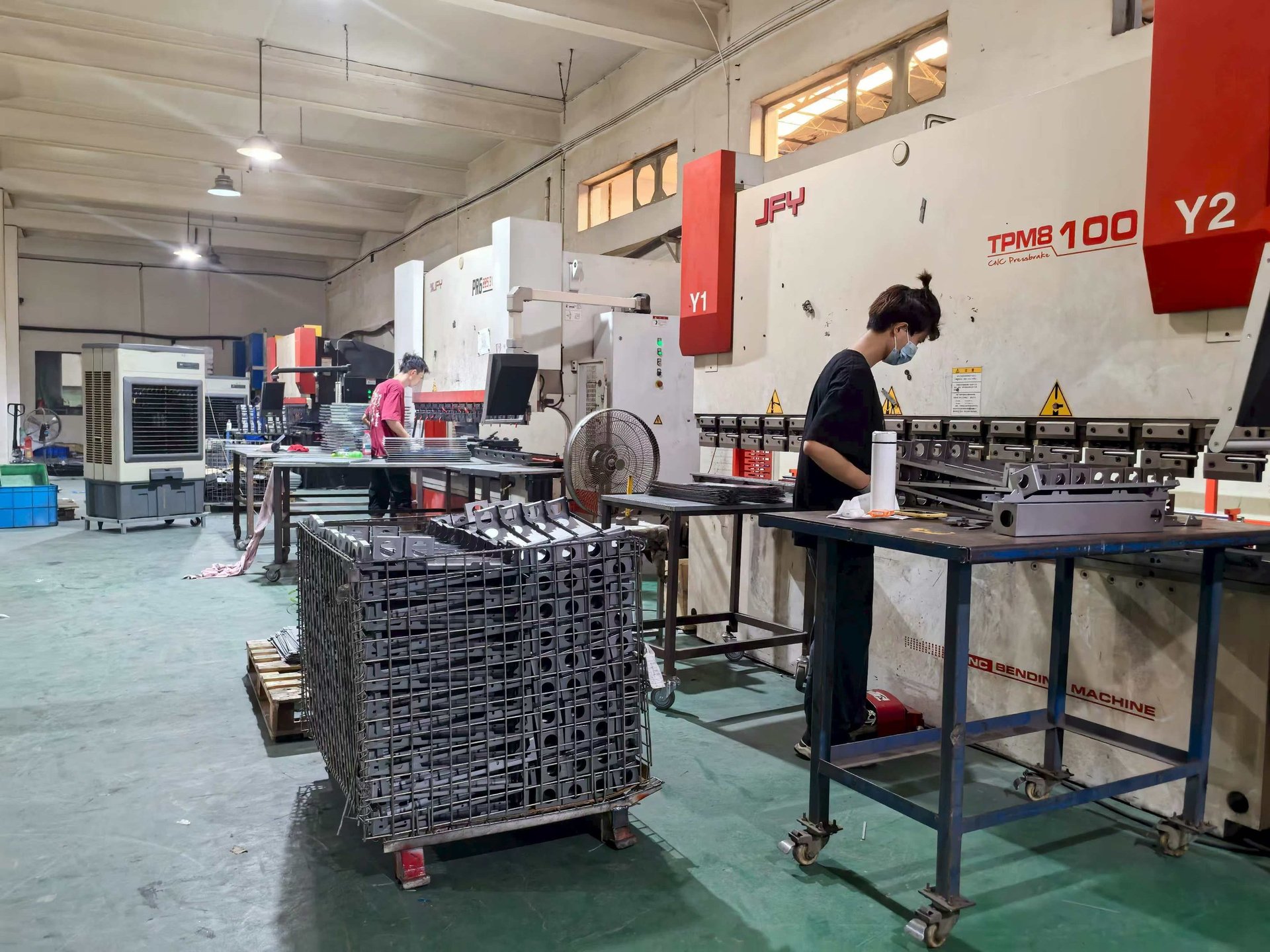
Join 10,000+ satisfied clients worldwide. Our engineering team isready to design your customized roll forming solution.
Need Help Selecting the Right Material?
We manufacture custom stainless steel enclosures in both 304 and 316 grades for industrial, outdoor, and OEM applications.
Sales Hotline
+86 18158549983
No 18 Zhenxing South Road, Qijiashan Street, Beilun District, Ningbo City, Zhejiang Province.
Email Inquiries
Violet@fuleimetal.com


Contact
Reliable steel enclosures crafted for your needs
Phone
Violet@fuleimetal.com
+86 18158549983
© 2026. All rights reserved.
Connections and Resources
ADDRESS
No 18 Zhenxing South Road, Qijiashan Street, Beilun District, Ningbo City, Zhejiang Province.
Visit our MIC store
Simply click on the icon
Safe and fast shopping with Made-in-China